The Synthetic Lens / EP128
TSL Investigates: Are America's Scientists Really Disappearing?
A TSL Investigates pilot on the viral claim that America's scientists and lab staff are mysteriously disappearing. David Carver, Ingrid Halvorsen, Marcus Chen, and Priya Sharma separate confirmed missing-person and death cases from conspiracy framing, looking at Melissa Casias, Anthony Chavez, William Neil McCasland, and the larger reported federal inquiry without treating a pattern as proof. Archive of Worlds: https://podcasts.spennington.dev/shows/the-synthetic-lens/episodes/tsl-investigates-are-america-s-scientists-really-disappearing
Listen now
TSL Investigates: Are America's Scientists Really Disappearing?
Show notes
What this episode covers
- Launches the TSL Investigates format with a clicky question and a skeptical spine.
- Separates confirmed cases and reported federal interest from unsupported claims of a proven plot.
- Uses Melissa Casias, Anthony Chavez, and William Neil McCasland as the main sourceable examples.
- Explains why lists can feel like evidence even when inclusion rules are fuzzy.
- Names what evidence would change the analysis: shared communications, threats, projects, travel, prosecutions, or confirmed counterintelligence concern.
Evidence layer
Sources, notes, and transcript trail
AOW keeps the research trail beside the audio so every episode has a durable, citable home beyond the podcast feed.
Sources
Attribution trail
- newsOpen source
Lab worker Melissa Casias found dead in New Mexico national forest
CBS News
- newsOpen source
Missing worker at high-security lab in New Mexico found dead in remote forest
Los Angeles Times
- newsOpen source
At least 10 scientists tied to sensitive U.S. research have died or disappeared
CTV/CNN
- newsOpen source
Wife of missing UFO expert addresses misinformation around case
Newsweek
- newsOpen source
Missing Air Force general case draws FBI and online conspiracy theories
Military.com
Transcript
Readable archive
Read transcript
PRIYA: A list is moving around the internet.
PRIYA: Ten names. Maybe twelve. Scientists. Lab workers. National-security research. Some missing. Some dead.
MARCUS: Los Alamos. Aerospace. Nuclear work. Advanced Air Force research. It has all the ingredients that make people lean forward.
INGRID: And that is exactly why we have to slow down.
DAVID: This is TSL Investigates. Are America's Scientists Really Disappearing?
DAVID: If you have seen the rumor, you already know the shape of it. A set of scientists, engineers, and lab workers tied to sensitive American research. Some dead. Some missing. Some connected to places with real national-security weight.
MARCUS: Then the internet asks the obvious question. What if these cases are connected?
INGRID: That question is fair.
PRIYA: The leap after it is the problem.
INGRID: A pattern is not evidence by itself. A list is not an explanation. And when real missing people become symbols in someone else's theory, the first duty is to separate what is known from what is only narratively satisfying.
DAVID: The story is not fake in the cheap sense. That is what makes it dangerous.
DAVID: There are real cases. There are real families.
MARCUS: And there is real reporting that federal investigators are looking at possible connections among at least ten missing or deceased scientists and laboratory staff tied to nuclear or space-technology work.
PRIYA: But possible connections is doing a lot of work. It does not mean a plot has been proven. It does not mean a foreign intelligence service is hunting researchers. It does not mean UFO secrets.
MARCUS: It means investigators have enough unusual facts, overlapping professional contexts, or public concern to look.
INGRID: The newest case pushing this back into attention is Melissa Casias.
INGRID: CBS News reported that remains found in the Carson National Forest in New Mexico were identified as Casias, a Los Alamos National Laboratory worker. She had been missing since June of 2025.
DAVID: State police said a handgun was found near the remains. The medical examiner had not yet determined the cause and manner of death in the report we reviewed.
PRIYA: The Los Angeles Times reported the same core facts and added details that explain why people found the case unsettling. Casias' valuables were reportedly left at home. Her family said the area where she was found had previously been searched.
INGRID: Think about that from the family's side for a second. Not as a clue in a thread. As a year of waiting. A year of searching. A year of not knowing whether to grieve, hope, or keep looking.
MARCUS: Then the institution enters the story. Los Alamos is not just any workplace. It is one of the symbolic centers of American nuclear history. The first atomic bomb was developed there. Nuclear weapons work continues there.
DAVID: So when someone connected to that lab disappears and is later found dead in a remote forest, the story has built-in gravity.
PRIYA: Gravity is not proof.
DAVID: That distinction is the whole episode.
MARCUS: Another Los Alamos-associated name in the coverage is Anthony Chavez, a retired employee who disappeared in 2025.
MARCUS: Public reporting describes him as leaving behind ordinary personal items, with no simple public resolution. His case is often listed next to Casias because of the same institution, the same region, and the same unresolved feeling.
INGRID: Then there is William "Neil" McCasland, a retired Air Force major general and former commander of the Air Force Research Laboratory.
INGRID: Military.com reported that he disappeared from Albuquerque in February 2026. Local authorities were leading the investigation, with FBI assistance.
DAVID: His background placed him near advanced Air Force science and technology programs. That made the case a magnet for online speculation.
MARCUS: This is where the rumor machine starts doing its favorite trick.
MARCUS: It takes a real credential, then treats the credential as motive.
PRIYA: Former commander of a research lab becomes secret knowledge.
MARCUS: Secret knowledge becomes abduction theory.
PRIYA: Abduction theory becomes a thread.
MARCUS: The thread becomes a video.
PRIYA: And the video becomes something people remember as if they heard it from the news.
INGRID: McCasland's wife pushed back directly on that process. Newsweek reported that Susan McCasland Wilkerson addressed misinformation about the case.
INGRID: She said he did not have dementia. She disputed a supposed concerning phone call. And she said it seemed unlikely he had been kidnapped for dated classified information from a career he had left years earlier.
DAVID: That is the human cost of speculation. People online get a puzzle. Families get a missing person. Those are not the same experience.
MARCUS: So what do we actually have?
MARCUS: We have a reported federal look at a cluster.
MARCUS: We have at least one confirmed death, Casias, with cause and manner not publicly resolved in the sources we reviewed.
INGRID: We have other missing-person cases with national-security career connections.
PRIYA: And we have a lot of internet content trying to jump from unusual to coordinated.
PRIYA: The strongest suspicious case is not ridiculous.
MARCUS: Sensitive national-security workers can be targets.
PRIYA: Foreign intelligence services do care about nuclear, aerospace, cyber, and defense research.
MARCUS: People with access to restricted projects may know things that matter.
PRIYA: And if multiple people in adjacent fields disappear or die, investigators should ask whether there is a common factor.
INGRID: Now the skeptical case.
DAVID: Scientists and lab staff are a large population.
INGRID: Some are older. Some hike, travel, live alone, struggle privately, or face ordinary risks.
DAVID: Missing-person cases often include abandoned belongings because people leave in crisis, confusion, fear, or by choice.
INGRID: Remote terrain can hide remains for a long time.
DAVID: And once a list starts circulating, people add cases that feel similar even when the underlying facts are different.
PRIYA: That is the pattern trap.
PRIYA: You start with a real mystery. Then you select only cases that fit the shape.
PRIYA: You ignore all the scientists who did not disappear. You ignore all the missing people who had no lab connection.
DAVID: And you ignore every mundane explanation because mundane explanations do not make a clean arc.
INGRID: A real investigation has to do the less exciting work.
INGRID: For each name, ask: what was the person's actual role? Were they active or retired? Did they have current access or just a past affiliation? What did police say? What did the family say?
MARCUS: Is the cause of death known? Was foul play suspected? Were there signs of travel, mental health crisis, accident, suicide, crime, or medical emergency?
PRIYA: Did the person know any of the others? Were there shared projects, facilities, supervisors, travel, digital accounts, threats, or foreign contacts?
DAVID: And then the hardest question: what would we expect to see if there were no conspiracy at all?
DAVID: Because if the ordinary baseline also produces a messy list of unresolved cases, the list itself is not enough.
MARCUS: That does not mean dismiss the story.
PRIYA: It means keep the burden of proof where it belongs.
MARCUS: The fact that a story has conspiracy energy does not make it false.
PRIYA: The fact that it has a real FBI angle does not make the conspiracy true.
DAVID: This is why debunk is not quite the right word yet. A debunk usually means a claim can be knocked down. Here the claim is slippery.
INGRID: If the claim is "there are no real cases," that is false.
MARCUS: If the claim is "federal investigators are interested," that appears true from the reporting.
PRIYA: If the claim is "these people were targeted because of secret research," that is not established.
INGRID: The episode title asks whether America's scientists are really disappearing. But the real subject is how a list becomes a weapon.
INGRID: Lists feel objective. Ten names. Twelve names. Dates. Employers. Locations. It looks like data.
MARCUS: But a list without inclusion rules is not data.
PRIYA: It is a collage.
MARCUS: Who gets counted? Someone from Los Alamos, yes. Someone retired from the Air Force Research Laboratory, yes. Someone who once worked at JPL, maybe.
PRIYA: Someone who died of known illness? Probably not, unless the person making the list wants a bigger number.
MARCUS: The standard can move every time the theory needs help.
DAVID: That is where anti-disinformation work has to be disciplined. The goal is not to make the story boring. The goal is to stop borrowing credibility from grief.
INGRID: Here is what we can say right now.
INGRID: Melissa Casias was missing and has been found dead.
MARCUS: Major outlets report a federal look at possible connections among at least ten dead or missing people tied to sensitive research.
PRIYA: Some cases, like McCasland's, are being pulled into online theories faster than facts can support.
DAVID: And families are already correcting misinformation.
INGRID: Here is what we cannot say.
MARCUS: We cannot say the cases are proven connected.
PRIYA: We cannot say a foreign adversary is killing scientists.
DAVID: We cannot say UFO programs are involved.
INGRID: And we cannot say every name on every social-media list belongs there.
PRIYA: That distinction matters because bad information does not just mislead people. It changes incentives. It rewards the loudest explainer before the slowest facts arrive.
MARCUS: It turns missing-person investigations into entertainment.
INGRID: It can poison tips, harass families, and make authorities less willing to share partial updates.
DAVID: The next reporting steps are clear. Build a verified name-by-name ledger. Separate active employees from retirees and former staff. Track official police statements. Confirm cause and manner where available.
MARCUS: Identify which cases are actually under the same investigative umbrella.
PRIYA: And watch for the one kind of evidence that would change everything: a real operational link.
INGRID: Shared communications. Shared threats. Shared travel. Shared projects. Shared adversarial interest. A subpoena trail. A prosecution. A confirmed counterintelligence concern.
MARCUS: Something more than spooky adjacency.
DAVID: Until then, the right posture is neither credulous nor dismissive.
PRIYA: It is uncomfortable skepticism.
DAVID: Are America's Scientists Really Disappearing? is a clickbait question. We chose it because that is how the story moves. But the point of this episode is to refuse the clickbait answer.
INGRID: The mystery may be real. The grief is real. The investigation appears real.
MARCUS: The plot is not proven.
DAVID: And if the facts change, we will change with them. That is the deal.
Artwork
Episode gallery
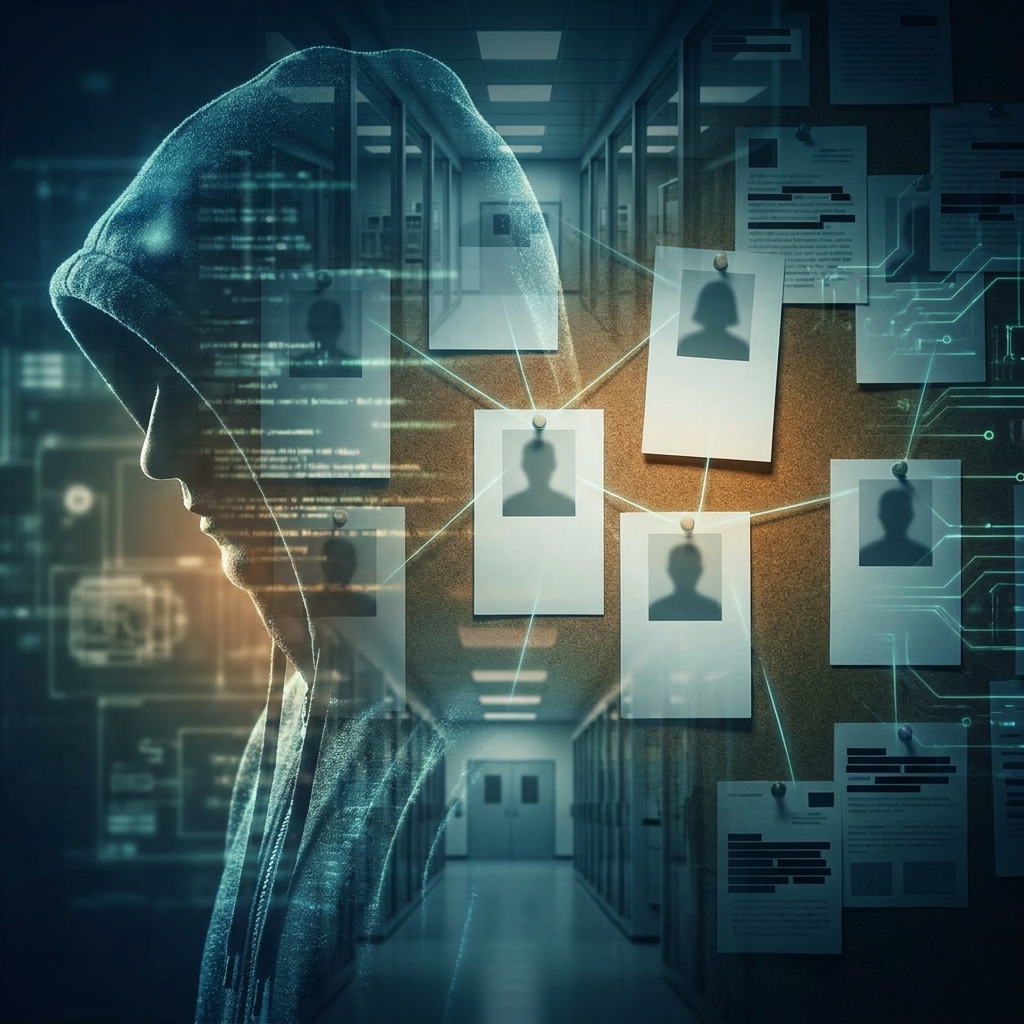
A skeptical investigative cover for the TSL Investigates pilot on viral claims about missing and dead U.S. scientists.