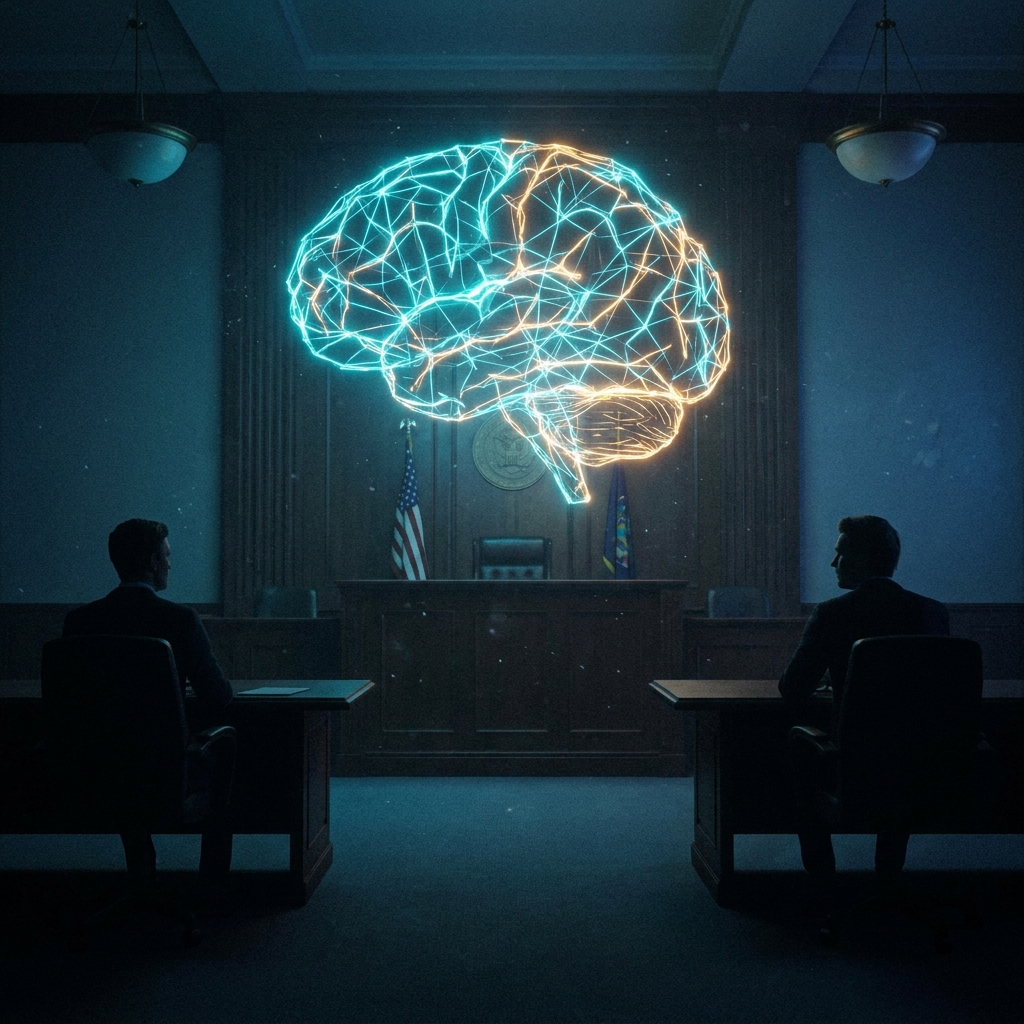
The Synthetic Lens / EP109
TSL Special: Musk v. OpenAI - Altman Cross-Examined
A narrow late-day Musk v. OpenAI trial-watch update on Sam Altman’s cross-examination, trustworthiness questions, and new ABC7/CNN Wire reporting about the control theory at the center of the case. The episode is explicit about the record: no public May 12 transcript, minute sheet, ruling/order, exhibit packet, or Doc. 535+ was available at the 5pm PT check; newest primary docket item remains Doc. 534. Archive of Worlds: https://podcasts.spennington.dev/shows/the-synthetic-lens/episodes/tsl-special-musk-openai-altman-cross
Listen now
TSL Special: Musk v. OpenAI - Altman Cross-Examined
Show notes
What this episode covers
- Focused late-day follow-up to EP108 rather than a recap.
- Covers the trustworthiness cross-examination and Altman’s reported denial that he tried to deceive the board.
- Explains the reported total-control/pass-to-children testimony as attributed testimony, not a finding.
- States clearly that public court materials still lag live courtroom reporting.
Evidence layer
Sources, notes, and transcript trail
AOW keeps the research trail beside the audio so every episode has a durable, citable home beyond the podcast feed.
Research digest
- 17:00 PT sweep checked official court page/calendar, CourtListener/feed/API, DocketAlarm, PACER-adjacent mirrors, GovInfo, and direct RECAP Docs. 534-570.
- Official case page and CourtListener feed still topped out at Doc. 534; direct RECAP probe found only Doc. 534 attachment 0.
- ABC7/CNN Wire updated with cross-examination and control testimony details after EP108 production.
Sources
Attribution trail
- live courtroom reportingOpen source
Musk v. Altman live updates: Sam Altman testifies in trial that could determine OpenAI's future
ABC7/KGO / CNN Wire
- public docket feedOpen source
Docket updates for Musk v. Altman
CourtListener
- official case pageOpen source
Musk v. Altman et al official case page
U.S. District Court, N.D. Cal.
- official calendarOpen source
Judge Yvonne Gonzalez Rogers calendar
U.S. District Court, N.D. Cal.
- primary court filingOpen source
Entry #534 / Kolter testimony-scope filing
CourtListener/RECAP
Transcript
Readable archive
Read transcript
DAVID: Good evening. This is The Synthetic Lens. I'm David Carver. This is a late update on Musk v. OpenAI, not a repeat of this afternoon's episode. Earlier today, we covered Sam Altman taking the stand and the newest primary filing, Doc. 534. At our five p.m. Pacific check, we again searched the public court record: the Northern District of California case page, Judge Gonzalez Rogers' calendar, CourtListener and RECAP, DocketAlarm, PACER-adjacent pages, GovInfo, and targeted searches for transcripts, minute entries, orders, rulings, exhibits, and Doc. 535 or later. We still found no public May twelfth transcript, no new minute sheet, no new ruling, and no Doc. 535-plus. The newest visible court filing remains Doc. 534.
MARCUS: But the live courtroom reporting did move. ABC7's live page, carrying CNN Wire copy, posted a later update with substantial new detail from Altman's cross-examination and control testimony. Reuters also surfaced later updates saying Altman denied betraying Musk and defended the for-profit push at trial, and that he said Musk wanted control of the ChatGPT maker. So this is a careful, attributed late-day update: not transcript text, not a court finding, but fresh courtroom reporting.
STAN: And the center of gravity has shifted. This afternoon's episode was about Altman finally answering the case. Tonight's update is about what Musk's side did with that moment: they attacked Altman's trustworthiness directly, while OpenAI's side pushed the jury back toward the question of who should control artificial general intelligence.
DAVID: According to ABC7, Musk attorney Steven Molo opened cross-examination with a short, pointed question: “Are you completely trustworthy?” That's not subtle. Musk's case is about charitable trust and corporate structure, but the jury has also heard days of testimony from former OpenAI insiders who criticized Altman's leadership. So Molo put the character question on the table immediately.
MARCUS: ABC7 reports that Molo grilled Altman about accusations of dishonesty from OpenAI board members, about his investments, and about his brief ouster as CEO in 2023. Altman, according to that report, called himself “an honest and trustworthy business person,” said he was not aware of some specific accusations, and said of the board crisis: “I was not trying to deceive the board.”
STAN: That sentence matters because Musk's side does not have to prove that Altman was a bad manager in general. They need jurors to connect alleged deception or mission drift to the specific legal theory: that OpenAI's shift into profit-oriented structures breached duties tied to the nonprofit. If Altman can make the 2023 board crisis look like a painful governance breakdown rather than proof of mission betrayal, OpenAI limits the damage.
DAVID: ABC7 also reports that Altman described the 2023 ouster as an “incredible betrayal,” “very public,” and “very painful.” He reportedly said: “If I knew how difficult and painful this was going to be, I never would have tried,” then added that, other than his family, OpenAI has been the most meaningful thing in his life.
MARCUS: That's the human counterweight to Musk's origin story. Musk has told the jury a betrayal story too: that he helped fund a nonprofit mission and watched it become something else. Altman is now offering his own betrayal story: he built the institution for a decade, was publicly removed, returned, and is still defending the mission as meaningful rather than merely lucrative.
STAN: Legally, neither betrayal story decides the case. But juries are made of people. The side that makes its structural argument feel like the more credible moral story has an advantage.
DAVID: The strongest new material is about control. ABC7 reports that Altman testified control over artificial general intelligence was an important factor in OpenAI's founding, because the cofounders believed one person should not be in charge of AGI if it were achieved.
MARCUS: That is the most Synthetic Lens sentence in this whole trial. The governance question is not abstract. If AGI is the prize, then control is the product. Who gets board control? Who gets economic upside? Who gets veto power? Who gets to decide whether a model is safe enough to release? The lawsuit is about nonprofit promises and billions of dollars, but underneath it is a fight over whether world-changing AI can be governed by any structure that billionaires won't eventually try to capture.
STAN: And according to ABC7, Altman testified that Musk wanted “total control” of any for-profit OpenAI entity at the start, with a promise to reduce that control over time. Altman said he was not convinced Musk would step back. ABC7 quotes him saying: “My belief is he wanted to have long-term control and that he would have had that had we agreed to the structure he wanted.”
DAVID: Important caution: that is Altman's testimony as reported by ABC7. It is not a judicial finding about what Musk wanted. But it is central to OpenAI's defense narrative: Musk's objection was not that OpenAI became too commercial in principle; it was that OpenAI became commercial without him controlling it.
MARCUS: ABC7 adds a striking exchange. According to the report, OpenAI's cofounders once asked Musk what would happen to OpenAI if he controlled it and died. Musk allegedly said he had not thought about it much and might pass it on to his children. Altman called that a “hair-raising moment” and said, “I didn't feel comfortable with that.”
STAN: That is explosive because it turns the charitable-trust language back on Musk. Musk says OpenAI's mission had to be protected from commercial capture. Altman is saying, in effect: we also worried about capture — but the capture we feared was one-person control, potentially hereditary control, over an AGI lab.
DAVID: Again, no transcript yet. So we should not embellish the moment. We do not know the full question-and-answer sequence, objections, tone, or context. But as reported testimony, it is highly relevant to the control theory.
MARCUS: ABC7 also reports Altman testified that Musk eventually resigned because he lost confidence in OpenAI and did not think it would be successful. The report says court evidence included a Musk email describing OpenAI as not a “serious counterweight” to Google's DeepMind. Altman also reportedly said Musk demotivated some key researchers by ranking their accomplishments, damaging company culture, and that Musk's resignation boosted morale.
STAN: That gives OpenAI a sequence: Musk wanted control, did not get it, lost confidence, left, built a competitor, and later sued. Musk's side will reject that framing. Their sequence is different: Musk funded a nonprofit public-interest mission, Altman and others changed the structure, Microsoft got privileged access, and the founding promise was broken. Same events, opposite moral architecture.
DAVID: Reuters' later listings point in the same direction. Reuters reported that Altman denied betraying Elon Musk and defended the for-profit push at trial. Reuters also reported that Altman said Musk wanted control of the ChatGPT maker. We have not captured a public transcript or full Reuters text, so we're keeping that at the level Reuters made available through the news listing and earlier accessible summaries.
MARCUS: Other outlets also clustered around the same theme. KQED's headline says Altman defended himself from Musk's accusations. The Verge framed Altman as winning on the stand, but possibly not enough. WBUR said Altman took the stand to fend off Musk's accusation that he “stole a charity.” NBC and the San Francisco Chronicle highlighted testimony that Musk tried to “kill” OpenAI. Those dramatic phrases should stay attributed until the transcript is public.
STAN: The important thing is not any single headline. It is convergence. The late-day reporting points to a courtroom turning on two credibility questions at once: Can the jury trust Altman when he says the mission evolved rather than broke? And can the jury trust Musk's nonprofit argument when OpenAI says he wanted total control of the thing he now says should be protected from private capture?
DAVID: Let's separate established record from live report. Established from the public docket: Doc. 534 remains the newest filing we found. No public May twelfth transcript, minute sheet, ruling, or Doc. 535-plus was available at our five p.m. check. Established from ABC7's accessible live report: Altman was cross-examined on trustworthiness, denied trying to deceive the board, described the 2023 ouster as painful, and testified about concerns over Musk control. Established only as attributed reporting, not court findings: Musk allegedly wanted total control, may have said control could pass to his children, and allegedly demotivated researchers before resigning.
MARCUS: What this does to the case is sharpen the question. Musk wants jurors to see OpenAI as a charity that got stolen. OpenAI wants jurors to see Musk as a would-be controller who lost the power struggle and then wrapped that loss in mission language.
STAN: And the jury may not fully accept either story. It could believe OpenAI needed capital and still distrust Altman. It could believe Musk cared about the mission and still think he wanted control. The verdict will likely turn on whether the law gives jurors a way to convert that messy history into a remedy: nonprofit reversion, board removal, money returned to the nonprofit, or no relief.
DAVID: That is why we are watching the primary docket so closely. Live reports tell us what the jury is hearing. Transcripts, minute sheets, rulings, and exhibits tell us what can be quoted with precision. Right now, the live reporting is ahead of the public record.
MARCUS: The technology takeaway is uncomfortable. The OpenAI founders said they were trying to prevent one person from controlling AGI. A decade later, the jury is hearing that the solution required so much capital, corporate machinery, and personal trust that control is still the question. Different hands, same problem.
STAN: The legal takeaway is narrower: today's late testimony helps OpenAI argue that its structure was a response to scale and control risk, not a betrayal. It helps Musk argue that everything depends on whether jurors believe Altman. That is a dangerous place for both sides.
DAVID: We'll keep watching for the public transcript, May twelfth minutes, any ruling on the trial briefs, and Doc. 535 or later. Until then, this remains a carefully attributed courtroom-reporting update. I'm David Carver. Stay critical.
Related
Continue the thread
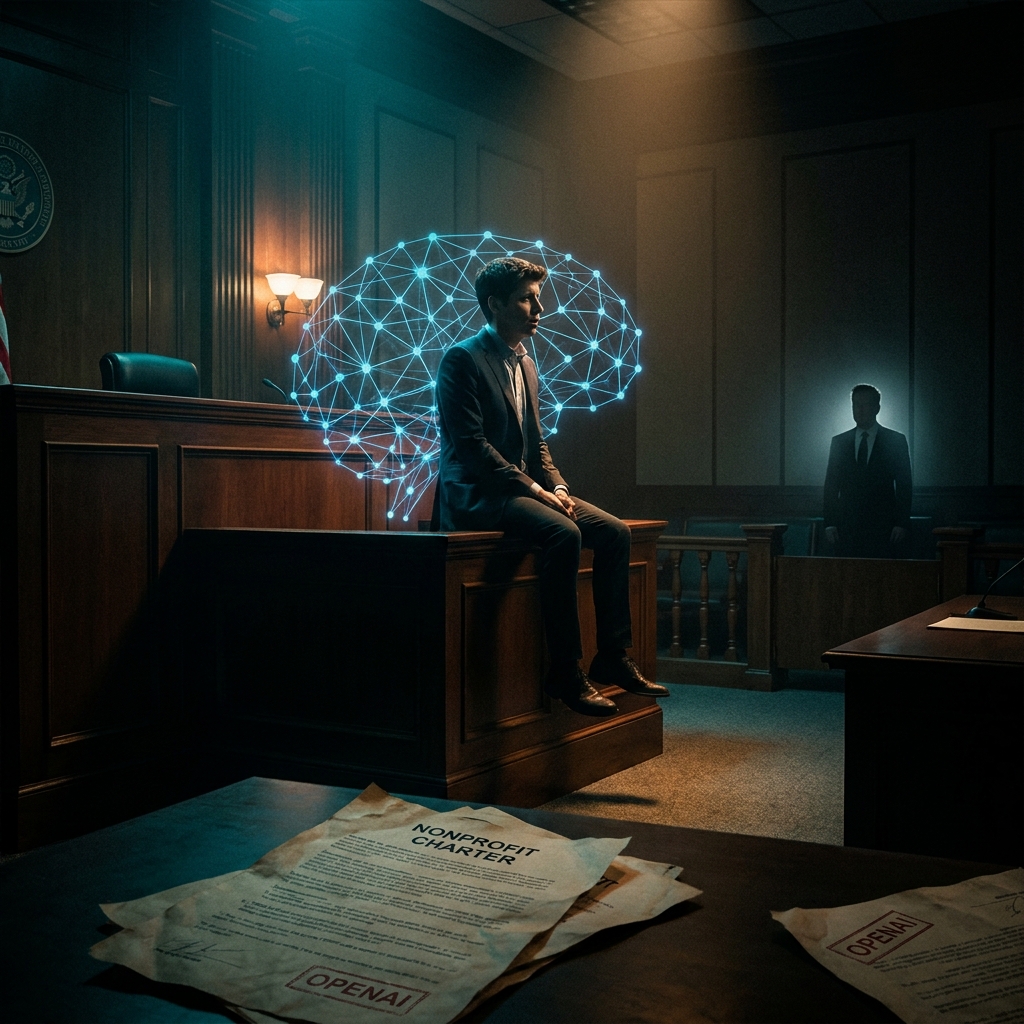
EP108 / May 12, 2026
TSL Special: Musk v. OpenAI - Altman Takes the Stand
Sam Altman takes the stand, shifting Musk v. OpenAI from witness accounts about him to Altman’s own defense of mission, structure, and control.
EP107 / May 12, 2026
TSL Special: Musk v. OpenAI - Sutskever Takes the Stand
Ilya Sutskever takes the stand, turning Musk v. OpenAI from Microsoft’s commercial story toward Altman credibility and internal governance.